Cloud, VPS, or Enterprise: How to Choose an HR Software Deployment
HR software isn’t one-size-fits-all when it comes to hosting. Compare cloud (managed), self-hosted VPS (simple and professional), and enterprise options, and pick the deployment that fits your team, budget, and data requirements.
S
SimpleHR Team
SimpleHR
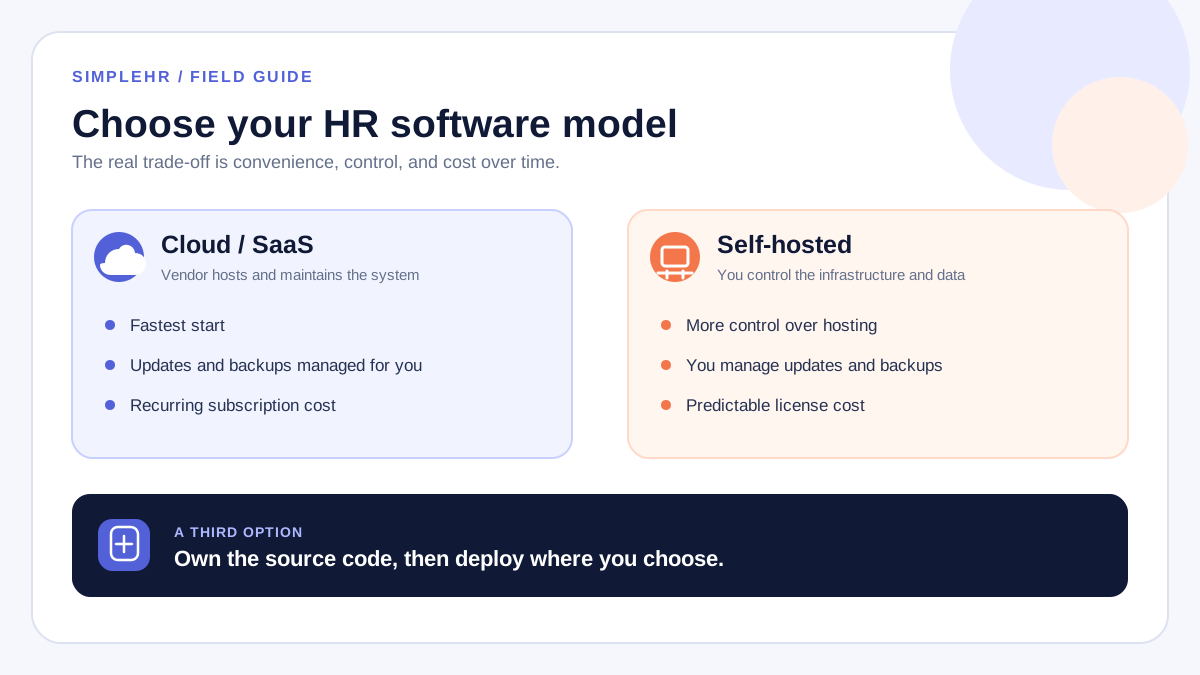
Once you’ve chosen your HR software, the next big decision is where it runs. The same product can live fully managed in the cloud, on your own server (VPS), or behind your own infrastructure, and each option trades convenience, control, and cost differently.
This guide compares the deployment options so you can match one to your team size, budget, and comfort with managing servers.
The three main deployment tiers
Deployment
Hosting
Database & storage
Best for
Cloud
Vercel / AWS Amplify
Supabase (PostgreSQL) + Cloudinary
Quick setup, no server work
VPS: Simple
Your own VPS (e.g. Hetzner)
SQLite + local storage
Control, low cost, ~25 people
VPS: Professional
Your own VPS
Self-hosted PostgreSQL + Cloudinary
Larger teams, production
Enterprise
On-prem / managed
PostgreSQL + managed storage
Strict compliance & data residency
Cloud: the fastest way to get running
Cloud deployment uses a managed platform like Vercel (or AWS Amplify), Supabase for the database, and Cloudinary for file storage. You push your code, connect services, and you’re live, with no servers to patch or maintain.
Easiest setup: import your repo, add environment variables, deploy.
Managed infrastructure: hosting, database, and storage handled for you.
Automatic scaling: add users and data without re-architecting.
Cloud storage required: you must use Cloudinary, since serverless has no persistent local disk.
When to pick cloud
Choose cloud when you want to be up fast with minimal maintenance and you’re comfortable storing data with managed cloud providers. It’s the pragmatic default for most teams coming from spreadsheets.
VPS: full control at a lower cost
If you want your HR data on infrastructure you control, a virtual private server (VPS) is the self-hosted middle path. Tools like Coolify make deployment approachable, and you can use SQLite or PostgreSQL depending on how big your team gets.
VPS Simple (Coolify + SQLite): a low-cost solo deployment, ideal up to roughly 25 employees, with local file storage.
VPS Professional (PostgreSQL): self-hosted PostgreSQL plus Cloudinary, suited to larger teams and production workloads.
Full control: you own the servers, the storage, and the data files.
Ownership: no per-employee subscription, and data stays where you put it.
Self-hosting isn’t just about cost. For some teams it’s the only way their data is allowed to live.
Enterprise: for strict requirements
Larger organizations or regulated industries often need more than shared cloud hosting. An enterprise deployment puts the app behind infrastructure and policies you control, which helps satisfy data residency and compliance obligations.
Deployment drives your backup strategy
How you deploy directly affects how you back up. Cloud deployments rely on managed services with their own durability, while self-hosted deployments need you to back up the database and the file storage directories yourself. Whichever you choose, make backups a scheduled habit, not an afterthought.
How to decide
Just getting started and want it fast? Go cloud. It removes server maintenance and gets you live quickly.
Want ownership and low recurring cost? Choose a self-hosted VPS, starting with the simple SQLite setup.
Growing past a small team? Move to a professional VPS with PostgreSQL.
Subject to compliance or data residency rules? Look at enterprise or on-premises deployment.
Frequently asked questions
Can I start on cloud and move to self-hosted later?
Because your data can be exported, you can move between deployment types. Just keep backups and confirm your export/import path before switching.
Is SQLite enough for production?
For small deployments (roughly up to 25 employees) SQLite is fine. For larger teams or heavier production workloads, use PostgreSQL.
Do I need Cloudinary for a VPS deployment?
For self-hosted VPS deployments you can use local file storage. Cloud deployments on serverless platforms must use cloud storage like Cloudinary.
Which deployment is most affordable long term?
A self-hosted VPS typically has the lowest recurring cost. Cloud services offer generous free tiers that can increase as your data and usage grow.
The bottom line
Deployment is a trade-off between convenience and control. Cloud gets you running fast with little maintenance, a VPS puts you in charge of servers and data at a lower cost, and enterprise options satisfy strict compliance needs. Match the deployment to your team size, budget, and data requirements, and you’ll pick the right one the first time.